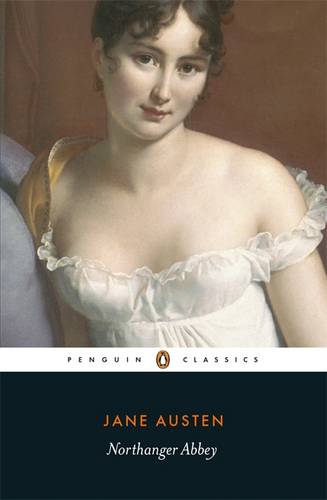
To honour a drunken deal made with my sister-in-law several years ago, Northanger Abbey is the fifth Jane Austen novel I’ve read in five Januarys. A deal is a deal.
What can I say about Northanger Abbey that I haven’t already said about Sense and Sensibility, Pride and Prejudice, Mansfield Park and Emma? Well, unlike its predecessors, I suppose it is mercifully short. But it’s still the same basic plot: a bunch of privileged people going to balls, and a heroine agonising about things she really shouldn’t be agonising about and eventually hooking up with some wonderfully suitable bloke she hardly knows.
I have to say, Northanger Abbey got off to a pretty bad start with me. In describing our heroine, Catherine Morland, in the opening paragraph, Austen writes:
Her father was a clergyman, without being neglected, or poor, and a very respectable man, though his name was Richard…
I think I speak on behalf of all Richards, respectable and otherwise, when I say, Knob off, Miss Austen!
I read somewhere Northanger Abbey is supposed to be a satire on young women whose over-impressionable imaginations are stimulated by reading the wrong kinds of novels. I can see why this might make an amusing theme for a novel written and set in the late-eighteenth century, but it didn’t do anything for me. In fact, that element of the story seemed rather silly. I couldn’t help thinking this posthumously published novel was only put out because it was by a popular author with a large existing fanbase hungry for more. The end, in particular, seemed very rushed, as if even Jane Austen was getting a bit fed up with it all.
Not my cup of tea, but, if you like Jane Austen’s other stuff, you’ll probably like this.
- Buy this book from Bookshop.org (UK) and help tax-paying, independent bookshops.
- Buy this book from Amazon.co.uk
- Buy this book from Amazon.com

Leave a Reply